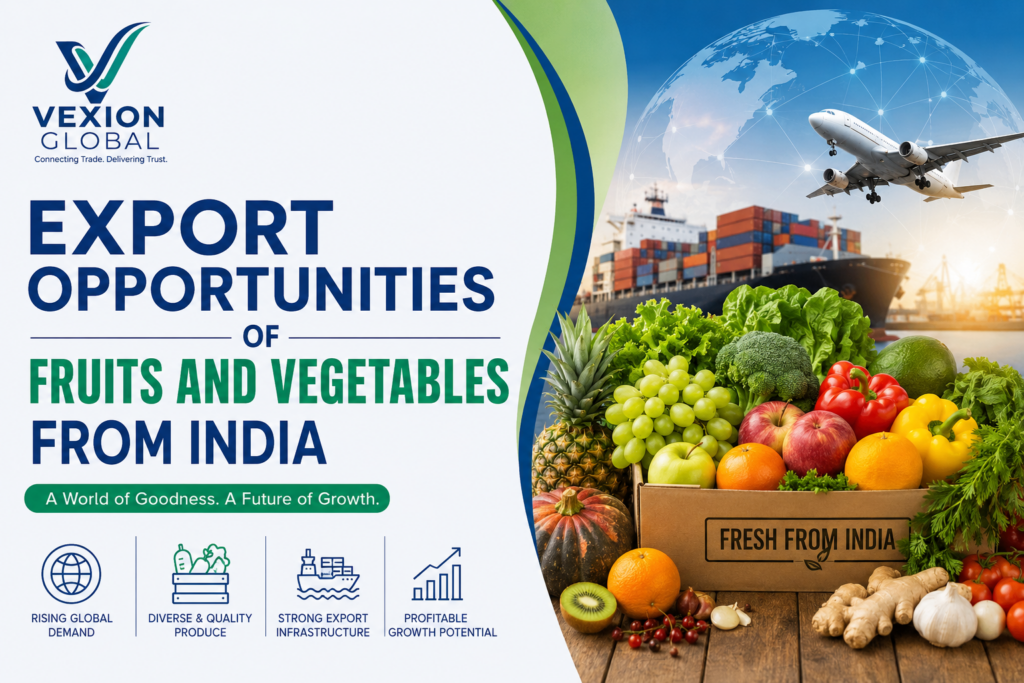
India is one of the world’s largest producers of fruits and vegetables, making it a global hub for fresh agricultural produce. With favorable climatic conditions, diverse soil types, and year-round cultivation, India produces hundreds of varieties of fruits and vegetables that are in high demand across international markets. As global consumers increasingly seek fresh, organic, and sustainably grown food, Indian exporters have immense opportunities to expand their businesses.
According to APEDA (Agricultural and Processed Food Products Export Development Authority), India exports fresh fruits and vegetables to more than 120 countries. Government initiatives, improved cold-chain infrastructure, better logistics, and free trade agreements have further strengthened India’s position in the global agricultural export market.
In this article, we explore the export opportunities of fruits and vegetables from India, the top export products, major destination countries, documentation requirements, challenges, and how exporters can successfully enter this profitable sector.
Why India is a Global Leader in Fruit and Vegetable Exports
India is the second-largest producer of fruits and vegetables globally. The country’s geographical diversity enables cultivation of tropical, subtropical, and temperate crops throughout the year.
Some major advantages include:
- Diverse climatic conditions
- Affordable agricultural labor
- Large cultivation area
- Government export incentives
- Growing organic farming sector
- Strong logistics network through ports and airports
- Increasing international recognition of Indian produce
These factors make India highly competitive in the global agricultural export market.
Major Fruits Exported from India
India exports a wide variety of fruits every year. Some of the highest-demand fruits include:
1. Mangoes
Often called the “King of Fruits,” Indian mangoes are famous worldwide.
Popular varieties include:
- Alphonso
- Kesar
- Banganapalli
- Dasheri
- Langra
Major importing countries:
- UAE
- Saudi Arabia
- United Kingdom
- USA
- Qatar
- Oman
- Kuwait
- Singapore
2. Bananas
India is among the world’s largest banana producers.
Export destinations include:
- Iran
- UAE
- Saudi Arabia
- Iraq
- Nepal
- Bahrain
Bananas enjoy strong international demand because of their long shelf life and affordability.
3. Grapes
Indian grapes have built an excellent reputation in Europe due to strict quality control and compliance with international standards.
Major buyers include:
- Netherlands
- Germany
- Russia
- United Kingdom
- Bangladesh
4. Pomegranates
Indian pomegranates are highly valued for their sweetness and rich color.
Top markets include:
- UAE
- Bangladesh
- Netherlands
- Saudi Arabia
- Malaysia
5. Guava, Papaya and Pineapple
These tropical fruits are witnessing increasing demand in:
- Middle East
- Southeast Asia
- Europe
Major Vegetables Exported from India
India exports both fresh and processed vegetables.
Onions
India has traditionally been one of the world’s leading onion exporters.
Major markets:
- Bangladesh
- Malaysia
- Sri Lanka
- UAE
- Nepal
Potatoes
Indian potatoes are exported for both fresh consumption and processing.
Importing countries include:
- Nepal
- Oman
- UAE
- Sri Lanka
Okra (Lady Finger)
Indian okra enjoys strong demand because of its freshness and quality.
Major buyers:
- UK
- UAE
- Saudi Arabia
- Qatar
Green Chillies
Indian green chillies are exported across Asia and the Middle East.
Popular markets include:
- Thailand
- Malaysia
- UAE
- Bangladesh
Drumsticks (Moringa)
Growing awareness of nutritional benefits has significantly increased exports.
Major destinations:
- USA
- Canada
- Australia
- Middle East
Other Exported Vegetables
- Garlic
- Ginger
- Tomatoes
- Cabbage
- Cauliflower
- Bitter Gourd
- Bottle Gourd
- Spinach
- Brinjal
- Beans
Top Importing Countries for Indian Fruits and Vegetables
Some of India’s largest agricultural export markets are:
- United Arab Emirates
- Saudi Arabia
- Bangladesh
- Nepal
- Oman
- Qatar
- Kuwait
- Bahrain
- Malaysia
- Singapore
- Netherlands
- United Kingdom
- Germany
- United States
- Canada
The Middle East remains India’s largest market due to geographical proximity, a large Indian diaspora, and high demand for fresh produce.
Emerging Export Opportunities
Several products are witnessing rapid growth in global demand:
Organic Fruits and Vegetables
Consumers increasingly prefer chemical-free produce.
Organic exports command premium prices in:
- Europe
- USA
- Canada
- Australia
Exotic Fruits
Demand is rising for:
- Dragon Fruit
- Avocado
- Passion Fruit
- Kiwi
- Jamun
- Custard Apple
Frozen Vegetables
Products such as:
- Frozen peas
- Frozen sweet corn
- Frozen mixed vegetables
are gaining popularity due to convenience.
Ready-to-Eat and Processed Products
Export opportunities are growing for:
- Frozen fruit pulp
- Fruit puree
- Pickles
- Dehydrated vegetables
- Dried fruits
Government Support for Agricultural Exports
The Government of India actively promotes agricultural exports through various schemes.
Some key initiatives include:
- APEDA registration and export promotion
- Agricultural Export Policy
- Cold chain infrastructure support
- Transport Assistance Scheme
- Quality certification support
- Market development assistance
- Export promotion through international trade fairs
These initiatives reduce costs and improve exporters’ competitiveness in global markets.
Documents Required for Exporting Fruits and Vegetables
Before exporting agricultural produce, exporters should obtain the following:
- Import Export Code (IEC)
- APEDA Registration (RCMC)
- GST Registration
- PAN Card
- Commercial Invoice
- Packing List
- Phytosanitary Certificate
- Certificate of Origin
- Bill of Lading or Airway Bill
- Shipping Bill
- Insurance Certificate (if applicable)
- Letter of Credit or other payment documents
Some importing countries may require additional certifications based on their food safety regulations.
Quality Standards and Compliance
International buyers expect strict compliance with quality and safety standards.
Exporters should focus on:
- Proper grading
- Uniform sizing
- Hygienic packaging
- Residue-free produce
- Cold chain maintenance
- Traceability systems
- Compliance with importing country regulations
- Timely delivery
Quality consistency helps build long-term relationships with international buyers.
Challenges in Exporting Fruits and Vegetables
Although opportunities are abundant, exporters should be prepared to address several challenges:
- Perishable nature of products
- Cold storage requirements
- High logistics costs
- Changing international regulations
- Seasonal production
- Currency fluctuations
- Pest and disease management
- Quality certification expenses
Investing in modern packaging, refrigeration, and supply chain management can significantly reduce these risks.
Tips for New Exporters
If you are planning to enter the fruit and vegetable export business, consider the following steps:
- Conduct thorough market research to identify high-demand products and target countries.
- Obtain all necessary registrations, including IEC and APEDA certification.
- Source produce directly from reliable farmers or Farmer Producer Organizations (FPOs).
- Maintain international quality standards and proper packaging.
- Participate in international trade fairs and B2B exhibitions.
- Use online B2B platforms such as Alibaba, IndiaMART, and TradeIndia to connect with overseas buyers.
- Build long-term relationships through transparent communication and timely deliveries.
- Stay updated on import regulations and phytosanitary requirements in target markets.
Future of Fruit and Vegetable Exports from India
The future of India’s fruit and vegetable export sector is highly promising. Increasing global demand for healthy food, the expansion of organized retail, improvements in cold-chain infrastructure, and supportive government policies are creating new opportunities for exporters.
Emerging markets in Africa, Eastern Europe, and Southeast Asia offer significant growth potential. At the same time, premium markets in Europe, North America, and the Middle East continue to seek high-quality, traceable, and sustainably produced fruits and vegetables. Exporters who invest in quality, certifications, branding, and efficient logistics will be well-positioned to capitalize on these opportunities.
Conclusion
India’s fruit and vegetable export industry presents tremendous opportunities for entrepreneurs, farmers, and businesses looking to expand into international markets. With its vast agricultural resources, competitive production costs, diverse crop portfolio, and strong government support, India is well-equipped to meet the growing global demand for fresh produce.
Success in this sector depends on maintaining high quality, complying with international standards, understanding market requirements, and building reliable relationships with overseas buyers. By leveraging modern technology, efficient supply chains, and strategic market selection, exporters can establish sustainable businesses and contribute to India’s growing presence in global agricultural trade.