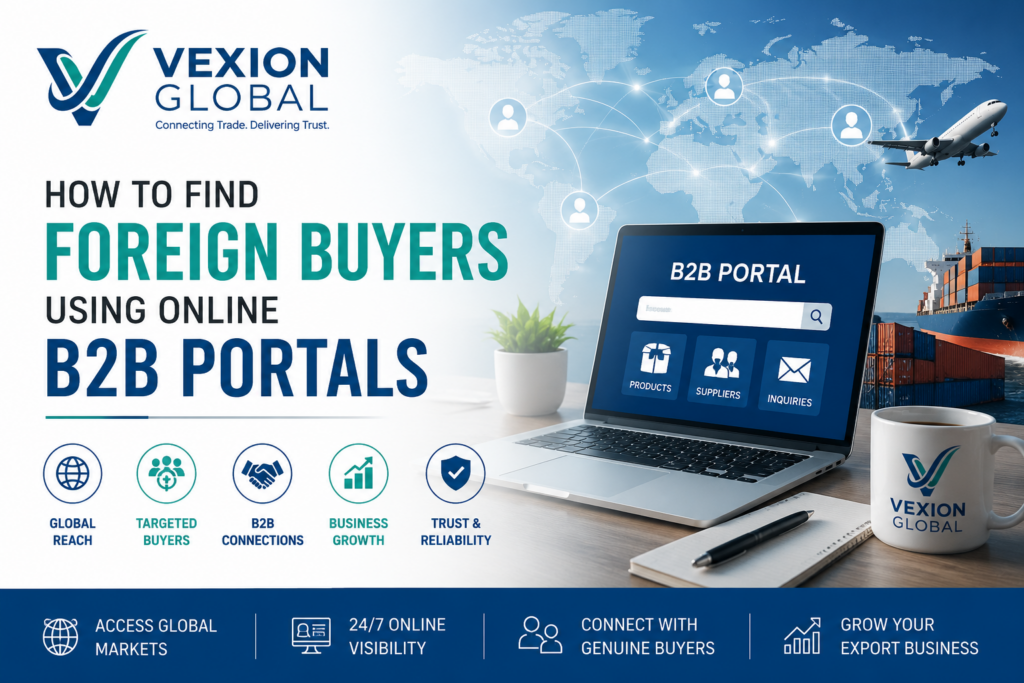
In today’s digital world, finding international buyers has become easier than ever. Gone are the days when exporters had to depend solely on trade fairs, overseas visits, or costly marketing campaigns. With the rise of online B2B (Business-to-Business) marketplaces, exporters can connect directly with verified buyers from across the globe.
Whether you are a new exporter or an established business looking to expand internationally, online B2B portals provide an affordable and efficient way to reach potential customers. However, simply creating an account on a marketplace is not enough. Success depends on how well you present your products, build credibility, and engage with buyers.
This guide explains how exporters can find genuine foreign buyers using online B2B portals and maximize their export opportunities.
What are Online B2B Portals?
Online B2B portals are digital marketplaces where manufacturers, exporters, importers, wholesalers, distributors, and retailers connect for business transactions.
These platforms allow exporters to:
- Showcase their products
- Receive international inquiries
- Communicate directly with buyers
- Build long-term business relationships
- Expand into new international markets
Unlike B2C platforms that sell directly to consumers, B2B portals focus on bulk and wholesale trade.
Why Should Exporters Use B2B Portals?
Using online B2B marketplaces offers several advantages:
Global Reach
Your products become visible to buyers from hundreds of countries without opening overseas offices.
Cost-Effective Marketing
Compared to international exhibitions or trade missions, listing products online is much more affordable.
24/7 Business Visibility
Your product catalog remains accessible around the clock, allowing buyers to discover your business anytime.
Faster Buyer Acquisition
Qualified buyers can directly send inquiries for pricing, product specifications, samples, and quotations.
Brand Building
A professional company profile improves credibility and builds trust among international buyers.
Popular Online B2B Portals for Exporters
Some of the most widely used international B2B platforms include:
- Alibaba.com
- IndiaMART
- TradeIndia
- Global Sources
- Made-in-China
- EC21
- ExportHub
- TradeKey
- eWorldTrade
- Kompass
Each platform serves different industries and markets. Exporters should select portals based on their target countries and product categories.
Step 1: Create a Professional Company Profile
Your company profile is the first impression buyers receive.
Include:
- Company name
- Business registration details
- Export experience
- Manufacturing capability
- Certifications
- Factory photographs
- Product categories
- Export markets served
- Contact information
- Website
- Social media links
A complete profile significantly increases buyer confidence.
Step 2: Upload High-Quality Product Listings
Product listings play a crucial role in attracting buyers.
Every product page should include:
Product Title
Use keyword-rich titles such as:
- Organic Turmeric Powder Exporter
- Premium Cotton T-Shirts Manufacturer
- Fresh Indian Mango Exporter
Product Description
Explain:
- Features
- Material
- Specifications
- Applications
- Packaging
- Minimum Order Quantity (MOQ)
- Production capacity
Product Images
Upload:
- HD photographs
- Multiple angles
- Packaging images
- Factory images
- Product in use
Professional images generate more inquiries.
Step 3: Use Relevant Keywords
Buyers search products using keywords.
Instead of writing:
Rice
Write:
- Premium Basmati Rice Exporter
- Indian Long Grain Rice Supplier
- Non-Basmati Rice Manufacturer
Proper keyword optimization improves product visibility within B2B portals.
Step 4: Obtain Verification Badges
Many B2B platforms verify businesses.
Verification may include:
- Business registration
- GST
- IEC
- Factory inspection
- ISO certifications
- Export licenses
Verified suppliers generally receive higher buyer trust and more inquiries.
Step 5: Respond Quickly to Buyer Inquiries
International buyers expect prompt communication.
Reply within:
- 2–6 hours whenever possible
- Maximum 24 hours
A professional response should include:
- Product details
- FOB/CIF pricing
- MOQ
- Delivery timeline
- Payment terms
- Product catalogue
- Certifications
Fast responses improve your chances of winning orders.
Step 6: Showcase Certifications
International buyers often prefer certified suppliers.
Common certifications include:
- ISO
- HACCP
- FSSAI
- APEDA Registration
- CE
- FDA
- Organic Certification
- GMP
Displaying certifications enhances credibility.
Step 7: Offer Product Samples
Many buyers request samples before placing bulk orders.
Ensure samples are:
- Properly packed
- Clearly labeled
- Sent promptly
Although sample shipments may involve costs, they often lead to long-term export relationships.
Step 8: Maintain Competitive Pricing
Pricing remains one of the biggest decision factors.
Before quoting:
- Research competitor prices
- Understand freight costs
- Calculate duties
- Include packaging expenses
- Factor in exchange rate fluctuations
Avoid quoting unrealistically low prices that could affect profitability.
Step 9: Build Buyer Trust
Trust is essential in international trade.
You can build confidence by:
- Maintaining an updated profile
- Sharing factory photos
- Posting company videos
- Providing client testimonials
- Displaying export certificates
- Highlighting years of experience
- Mentioning countries you already export to
The more transparent your business appears, the more likely buyers are to engage.
Step 10: Follow Up Professionally
Many exporters lose business simply because they fail to follow up.
After sending a quotation:
- Send a reminder after 3–5 days.
- Ask if additional information is required.
- Offer revised pricing if appropriate.
- Share new product launches or promotions.
Persistent yet professional follow-ups often convert inquiries into orders.
Avoid Common Mistakes
Many exporters make avoidable errors on B2B portals, such as:
- Incomplete company profiles
- Low-quality product images
- Delayed responses
- Overpricing products
- Ignoring buyer messages
- Posting inaccurate information
- Using copied product descriptions
- Failing to update stock or pricing
Avoiding these mistakes can significantly improve inquiry conversion rates.
Tips to Increase Buyer Inquiries
To maximize visibility and engagement:
- Update product listings regularly.
- Add new products frequently.
- Use relevant export keywords.
- Upload high-resolution images.
- Publish product videos where possible.
- Participate in platform promotions.
- Collect positive buyer reviews.
- Maintain excellent communication.
- Offer competitive payment terms.
- Build a professional online presence beyond the B2B portal.
Beyond B2B Portals
While B2B marketplaces are effective, exporters should also diversify their buyer acquisition strategy by:
- Building an SEO-optimized website
- Using LinkedIn for B2B networking
- Participating in virtual and physical trade fairs
- Registering with export promotion councils
- Leveraging email marketing
- Running digital advertising campaigns
- Partnering with overseas distributors
A multi-channel approach ensures a steady flow of international leads.
Final Thoughts
Online B2B portals have transformed the way exporters connect with international buyers. With the right strategy, even small and medium-sized businesses can access global markets without significant investment. Success, however, requires more than simply creating an account. A professional company profile, optimized product listings, prompt communication, verified credentials, and consistent follow-up are key to building trust and converting inquiries into long-term export partnerships.
For Indian exporters, combining B2B portals with a strong digital presence, quality products, and reliable customer service can create sustainable export growth and open doors to new markets worldwide. By investing time in optimizing your online presence and nurturing buyer relationships, you can establish your brand as a trusted global supplier and unlock new international business opportunities.